
A national network coordinated by Georgia Tech expanded access to advanced tools and helped shape the next generation of research facilities.
August 31, 2026
When Jacob Sylvie, an undergraduate researcher at Berry College, needed advanced tools for his research, his institution did not have the necessary equipment on hand. He and his adviser brought their research to Georgia Tech’s Materials Characterization Facility.
That access supported Sylvie’s research and contributed to work that produced a peer-reviewed publication and strengthened his successful application for a Goldwater Scholarship and a future in research. The experience demonstrated that world-class scientific discovery does not require the budget of a major research university.
Sylvie’s research at Georgia Tech was made possible by the U.S. National Science Foundation’s (NSF) National Nanotechnology Coordinated Infrastructure, or NNCI. Many advances in electronics, medicine, energy, and advanced materials begin with research at the micro- and nanoscale. Microscale research examines structures comparable to the width of a human hair, while nanoscale research focuses on structures a thousand times smaller, approaching the scale of molecules.
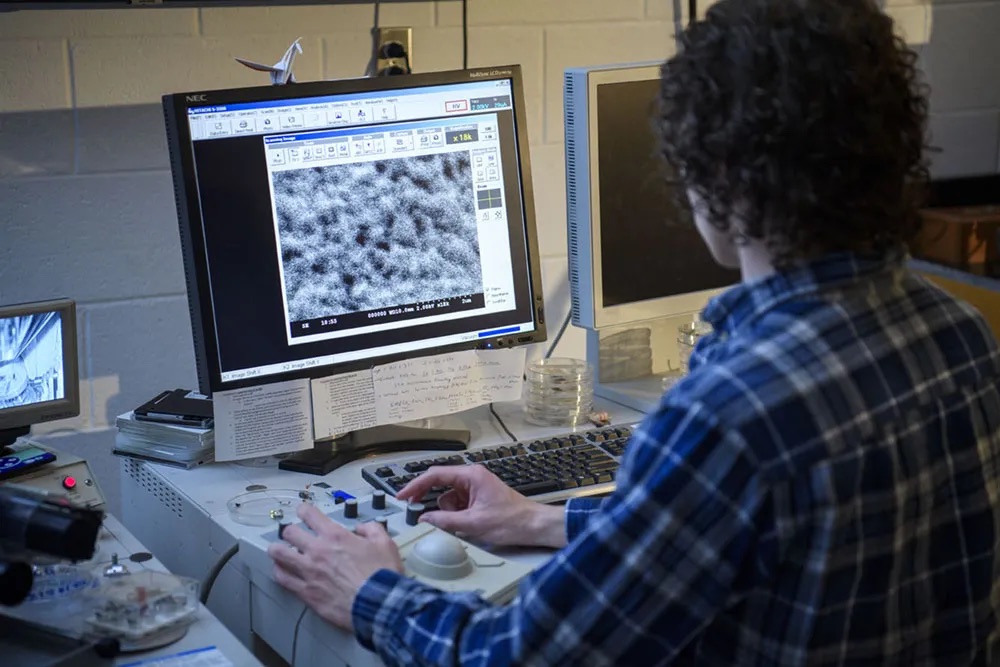
Jacob Sylvie operates a scanning electron microscope to analyze nanoscale materials, gaining hands-on research experience through advanced characterization techniques at Georgia Tech.
The equipment required to create and analyze materials at those scales is expensive, and many universities lack the funding or technical staff required to operate dedicated facilities. To make sure promising ideas are not limited by geography or institutional resources, the NSF created the NNCI in 2015. It was the latest iteration of NSF-supported, open-access facilities dating to 1977. This network of shared research facilities gives researchers, students, entrepreneurs, and educators access to state-of-the-art equipment and technical expertise.
Through this network, Georgia Tech helped open the door to discovery for researchers across the country.
A Decade of Impact
For over 10 years, Georgia Tech has coordinated a national network of research facilities across the United States

54,000+ total users engaged across all member facilities nationwide.

10 million+ facility hours logged by researchers, students, and industry users.

461 academic institutions served, representing a range of institutions, including two-year and four-year colleges, HBCUs, non-R1 institutions, and major research universities.

2,400+ small companies and startups empowered to prototype and commercialize new technologies
Building Community
In 2015, Georgia Tech and the Joint School of Nanoscience and Nanoengineering were selected to operate the Southeastern Nanotechnology Infrastructure Corridor (SENIC), an NNCI member site. In a separate process, Georgia Tech was chosen by the NSF as the NNCI’s national coordinating office in 2016. Under previous similar programs, leadership had operated as a centralized managing office issuing subawards to sites. For the NNCI, the NSF embraced a different leadership model in which Tech did not control funding. Instead, it connected and coordinated 16 member sites nationwide.
“The approach of the NNCI was democratization of access,” said David Gottfried, NNCI coordinating office director. “Everybody had the same ability to use the tools and interact with the staff.”
This philosophy is what made opportunities like Sylvie’s possible. Whether a researcher comes from a large university, a small liberal arts college, a startup company, or simply has an idea worth pursuing, the NNCI was designed to make advanced tools and expertise accessible regardless of institutional size or resources.
Through this approach, the NNCI built a nationwide community, spearheading technical working groups, data-collection frameworks, regional networks within the NNCI (such as the Southeastern Nano Facility Network and the Northwest Nanotechnology Laboratory Alliance), staff exchange programs, and community-building initiatives.
“Over time, the network became much more than a collection of facilities,” said Gottfried. “It became a national community of experts who were collectively advancing nanotechnology research and education. When one site learned something new, the whole network benefited.”
By emphasizing shared expertise, the NNCI created a pipeline for both academia and industry. Sites actively referred users to partner institutions best suited for their technical needs rather than competing for users.
Startups, Schools, Industry
As the Southeast’s nanotechnology anchor, Georgia Tech translated the NNCI’s vision of broader access into regional impact. Rather than operating as an isolated research operation, Georgia Tech encouraged neighboring academic institutions, regional universities, and technology startups to use the Institute’s cleanroom and materials characterization facilities.
Beyond academia, Georgia Tech spearheaded regional economic development by lowering the financial barriers for early-stage commercial ventures.
“Small business and startups cannot afford to build a cleanroom or purchase an expensive electron microscope,” said Jacob Jones, director of the Research Triangle Nanotechnology Network, another NNCI site. “Through the NNCI, they can develop their technologies and help address society’s challenges.”
Georgia Tech’s success stories include CardioMEMS, which evolved over two decades from Georgia Tech faculty research into a commercial medical device company and relied on long-term access to cleanroom resources. Similarly, startups like Andson Biotech benefited from seed grants to transition from student research projects into thriving businesses.
Over the NNCI’s 10 years, Georgia Tech provided equipment access and staff expertise to 55 U.S. academic institutions — with many of these campuses supporting multiple teams and multi-year research projects.
Running a facility like this in isolation at your college or university can be daunting. It’s so much easier when you know someone to call to ask questions or share ideas, someone with direct experience delivering the services you’re also trying to deliver"
– David Dickensheets
Connecting People
The network’s strength includes its technical staff. NSF funding supported expert staff at Georgia Tech and other NNCI sites who trained users to independently operate complex tools and share resources across state lines.
“Our staff benefitted from meeting with folks in similar positions at other institutions,” said David Dickensheets, director of the Montana Nanotechnology Facility. “The NNCI was so beneficial for us that we worked to establish a regional nano facility network in the Northwest. We wanted to bring together other facilities who were not part of NNCI, to get their staff connected to one another.
“Running a facility like this in isolation at your college or university can be daunting. It’s so much easier when you know someone to call to ask questions or share ideas, someone with direct experience delivering the services you’re also trying to deliver.”
The creation of facility networks and specialized working groups allowed staff to widely share best practices, including a new international network across the U.S., Canada, Japan, Europe, and Australia.
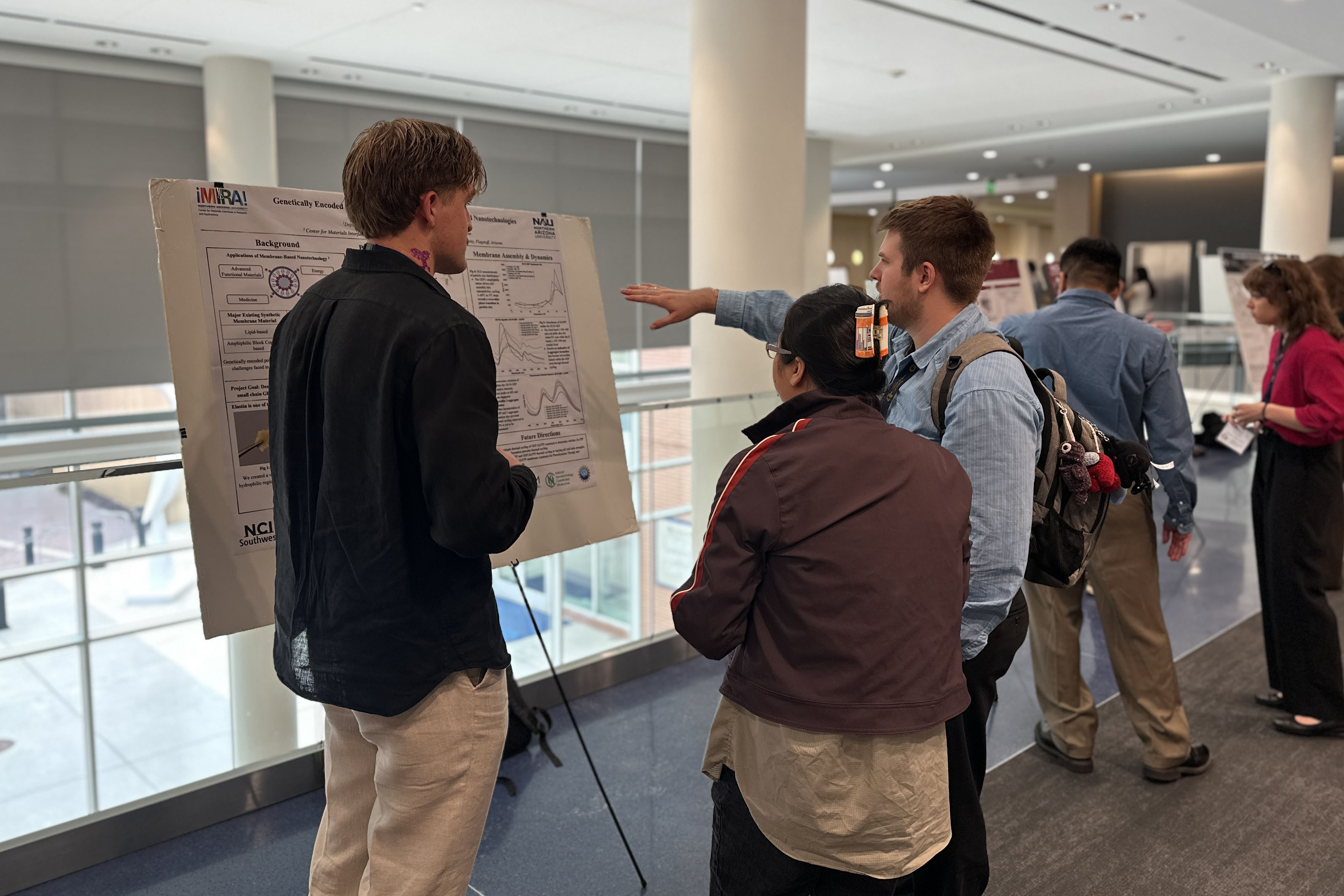
Students in the 2026 Research Experiences for Undergraduates (REU) program present their research findings during the annual REU Convocation, showcasing projects developed through hands-on research experiences across microelectronics, nanotechnology, and related disciplines.
“As we all face common challenges, it is a valuable resource to ask other experienced tool owners for help or suggestions in problem solving as well as learning about the latest developments and techniques,” said Devin Brown, principal research engineer at Georgia Tech’s Institute for Matter and Systems.
In 2020, when the COVID-19 pandemic forced facility shutdowns nationwide, NNCI’s leadership was vital. Working together with network sites, the NNCI coordinating office helped create safe reopening procedures, social distancing protocols, and operational standards that enabled U.S. labs to safely resume research earlier than originally anticipated.
The NNCI coordinating office at Georgia Tech also helped strengthen national talent pipelines, including the annual Research Experience for Undergraduates (REU) convocation. Rotating among member sites, this end-of-summer convocation brought together REU students from across the country to present their research, network with peers, and discover future opportunities.
These cross-site connections created lasting career pathways and gave students opportunities to make a meaningful community impact alongside their graduate studies. For instance, when Abby Carbone was an undergraduate employee at RTNN, she operated transmission electron microscopes and served as a K-12 STEM ambassador. She later pursued graduate studies at Stanford. While there, she connected with Stanford’s outreach program staff through the NNCI network, allowing her to continue her K-12 outreach throughout her doctoral studies.
Looking Ahead
As the NNCI comes to an end, its impact extends far beyond its 10 years. In 2023, the NNCI organized a two-day national workshop in Washington, D.C., focused on the future of shared nanotechnology infrastructure. Bringing together government, industry, and academic stakeholders, the workshop resulted in a comprehensive report that directly informed the NSF’s planning for next-generation research networks.
This legacy now paves the way for the National Quantum and Nanotechnology Infrastructure (NQNI). As scientific frontiers shift toward quantum-based applications, NQNI carries forward the core principles championed by Georgia Tech and its partners during the NNCI era: open access, collaborative expertise, and community-driven innovation.
Ultimately, while Georgia Tech's world-class facilities provided the physical foundation, its legacy may be the national community it helped forge — connecting thousands of researchers, entrepreneurs, educators, and technical experts across the country.