

Microelectronics Day
Microelectronics Day brings researchers, students, and industry partners together to explore advances in microelectronics research and innovation.
Registration
Date: Tuesday, November 3, 2026
Time: 8:00 a.m. – 4:30 p.m.
Location: Marcus Nanotechnology Building, Georgia Tech
About Microelectronics Day
Microelectronics Day brings together Georgia Tech researchers, students, industry partners, and external collaborators for a full-day event focused on groundbreaking advances in microelectronics research and innovation. The program will also feature the Oliver Brand Memorial Lectureship on Electronics and Nanotechnology, with two distinguished speakers, Adharsh Rajagopal and Michael Hamilton.
Hosted by the Institute for Matter and Systems, the event will highlight multi-disciplinary innovation across key areas, including:
- Semiconductor Devices
- Advanced Packaging
- Heterogeneous Integration
- Materials
- Bioelectronics
- Extreme-environment Electronics
- Fabrication, Characterization and Shared Research Tools
- Emerging Electronic Systems
Whether you are looking to explore cutting-edge faculty research, learn about shared-user facilities, or identify new opportunities for industry collaboration, Microelectronics Day is a hub that showcases Georgia Tech's microelectronics ecosystem.
Oliver Brand Memorial Lectureship
Microelectronics Day will feature the Oliver Brand Memorial Lectureship on Electronics and Nanotechnology, with two distinguished speakers: Adharsh Rajagopal of Micron Technology and Michael Hamilton of Auburn University and Google Quantum AI.
Presented as part of Microelectronics Day, the lectures will take place Tuesday, November 3, from 9:15–10:45 a.m. in the Marcus Nanotechnology Building.
Adharsh Rajagopal will speak from 9:15–10 a.m., followed by Michael Hamilton from 10–10:45 a.m.
Featured Speakers

Michael Hamilton
Michael Hamilton is the James B. Davis Professor in electrical and computer engineering at Auburn University and leads wiring, interconnects, and packaging efforts for quantum computing at Google Quantum AI. His research spans superconducting and cryogenic devices, advanced packaging and integration technologies, nanotechnology-enabled electronic and photonic systems, and semiconductor device performance in extreme environments. Hamilton previously served as director of the Alabama Micro/Nano Science and Technology Center and worked at MIT Lincoln Laboratory, where he focused on satellite systems, cryogenic electronics, and advanced imaging technologies.

Adharsh Rajagopal
Adharsh Rajagopal works in DRAM Device and Cell Technology at Micron Technology, where he develops advanced memory technologies for next-generation semiconductor devices. His expertise spans semiconductor device physics, materials characterization, process integration, and thin-film technologies. Before joining Micron, Rajagopal conducted doctoral research at the University of Washington, focusing on high-performance tandem perovskite solar cells and emerging photovoltaic technologies. He holds a doctorate in materials science and engineering and brings extensive experience in semiconductor manufacturing, memory innovation, and advanced materials research.
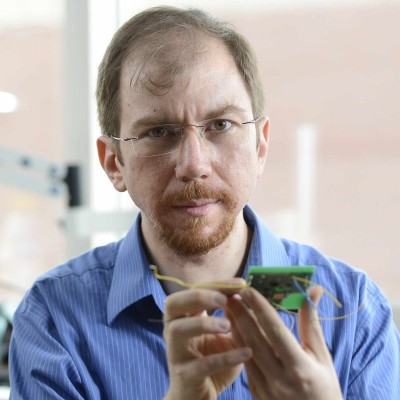
Alper Bozkurt
Alper Bozkurt is a distinguished professor of electrical and computer engineering at North Carolina State University and co-director of the ASSIST Center. His research explores bioelectronics, wearable and implantable sensors, and bionic systems that connect biological and engineered worlds.

Andrew Kummel
Andrew Kummel is a professor of chemistry and biochemistry at the University of California San Diego and a leader in nanotechnology and microelectronics research. His work explores advanced materials and processing technologies, while his mentoring and outreach efforts have helped prepare the next generation of cancer researchers.
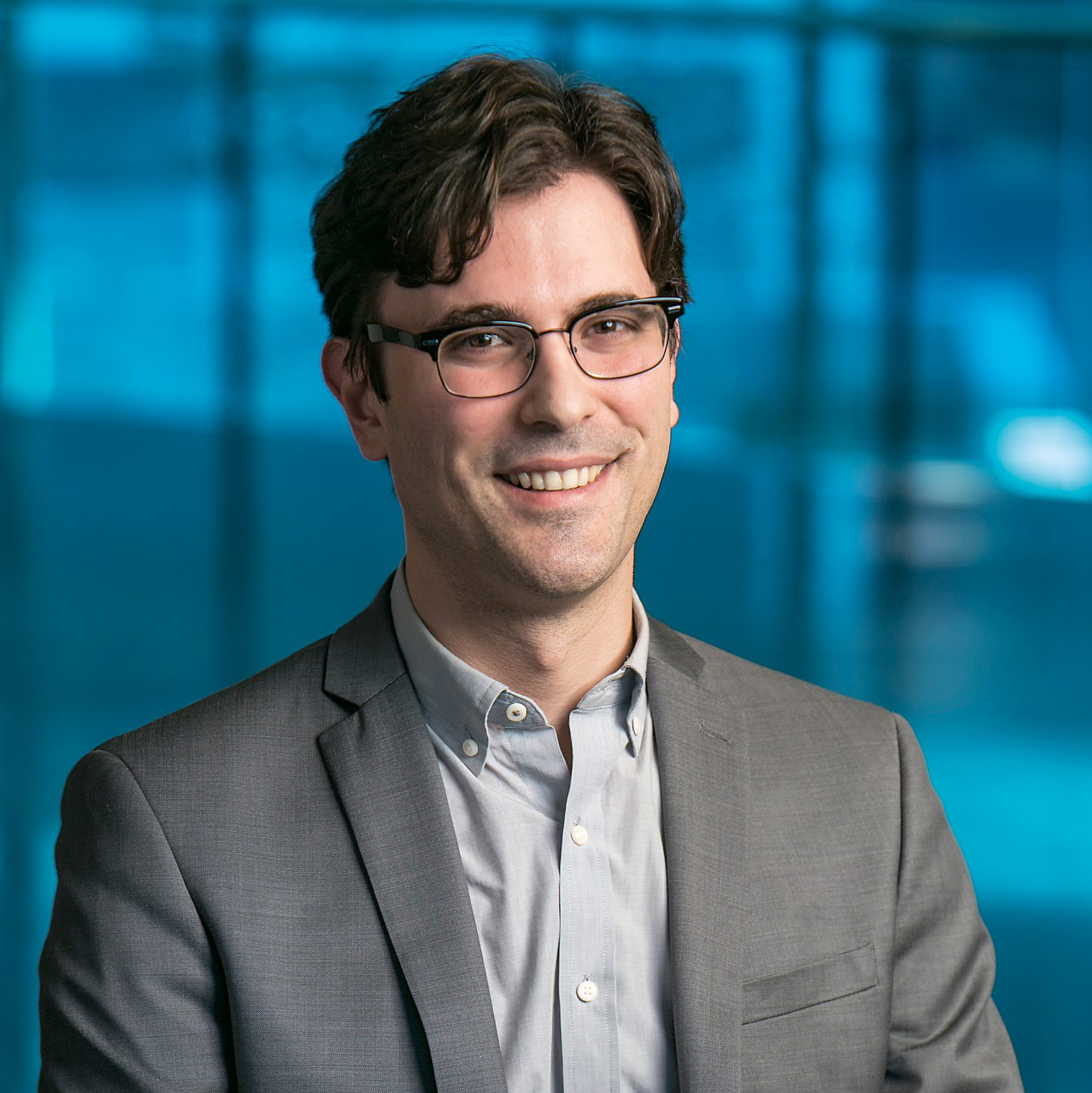
Marc Miskin
Marc Miskin is an associate professor of electrical and systems engineering at the University of Pennsylvania and director of the Nanorobotics Lab. His research explores microscopic robots that can move, sense, communicate, and compute, advancing new approaches to robotics, nanoscience, and interactions with biological systems.
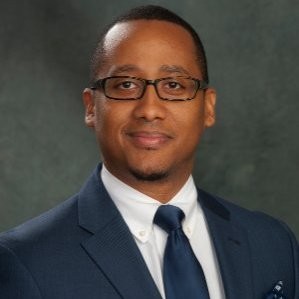
Adilson Cardoso
Adilson Cardoso is a senior principal electrical engineer at Raytheon, an RTX business, specializing in radio frequency and microwave circuit design. With nearly 20 years of industry experience, his work focuses on developing advanced RF and microwave technologies.
Agenda
Welcome
8–9 a.m.
Breakfast and Registration
9–9:15 a.m.
Opening Remarks
Oliver Brand Memorial Lectureship
9:15–10 a.m.
Adharsh Rajagopal, Micron Technology
Oliver Brand Memorial Lecture
10–10:45 a.m.
Michael Hamilton, Auburn University | Google Quantum AI
Oliver Brand Memorial Lecture
10:45–11 a.m.
Break
Morning Research Talks
11–11:15 a.m.
Asif Khan, Georgia Tech School of Electrical and Computer Engineering
11:15–11:30 a.m.
Muhannad Bakir, Georgia Tech School of Electrical and Computer Engineering
11:30–11:45 a.m.
Break
11:45 a.m.–12 p.m.
Alan Doolittle, Georgia Tech School of Electrical and Computer Engineering
12–12:30 p.m.
Chemistry and Chemical Processing of Hybrid Bonding Interfaces
Andrew Kummel, Professor of Chemistry and Biochemistry, University of California San Diego
12:30–2 p.m.
Lunch
Afternoon Research Talks
2–2:30 p.m.
Microscopic Robots That Sense, Think, and Act
Marc Miskin, Associate Professor of Electrical and Systems Engineering, University of Pennsylvania
2:30–2:45 p.m.
Soft Microelectronics and Wearable Bioelectronics for Continuous Health Monitoring
Hong Yeo, Georgia Tech Woodruff School of Mechanical Engineering
2:45–3 p.m.
Thermal Metrology for Electronic Materials and Devices
Satish Kumar, Georgia Tech Woodruff School of Mechanical Engineering
3–3:15 p.m.
Break
3:15–3:30 p.m.
Lauren Garten, Georgia Tech School of Materials Science and Engineering
3:30–4 p.m.
Adilson Cardoso, Senior Principal Electrical Engineer, Raytheon
4–4:30 p.m.
Energy-Efficient Microelectronics for Next-Generation Wearable Sensors: Advances from the NSF ASSIST Center
Alper Bozkurt, Professor of Electrical and Computer Engineering, North Carolina State University
Reception
5–7 p.m.
Reception
Visiting Campus
The Institute for Matter and Systems is located in the heart of Georgia Tech's vibrant campus. There are numerous parking, dining, and hotel accommodations within walking distance of our home in the Marcus Nanotechnology Building. Whether you’re attending an event, exploring our facilities, or meeting with our experts, we look forward to your visit.
Getting to Atlanta
Attendees traveling to the workshop should fly into the Atlanta-Hartsfield International Airport (ATL). As the busiest passenger airport in the world, ATL offers direct flights to a wide array of global cities.
From the airport, you can reach campus by taxi (approximately $40), or by using the MARTA public transportation system. There is a MARTA station located inside the airport. The closest stops to campus are the North Avenue Station and the Midtown Station.
Local Accommodations
There are many hotels located near campus with a range of pricing options.
View descriptions and prices of the hotels most frequently used by Georgia Tech guests here.
Visitor Parking
Several hourly parking lots are located on campus. Credit cards are accepted at all visitor parking areas. Visitor surface lot area 4 or the W23 parking deck are the closest lots to the Marcus Nanotechnology Building.
Parking rate details, handicap parking locations, temporary and weekend parking permit information: Georgia Tech Parking & Transportation Services.
Campus Transit
There are a variety of free transit options for getting around campus and to nearby destinations. Each service complies with the recommendations of the Americans with Disabilities Act.
Campus Map
Search for parking lots, campus transit stops, buildings, areas of interest, and a self-guided campus tour.
Questions about the event? Contact Rebecca Grieco at rebecca.grieco@gatech.edu.